Selma's long, sunny stretches make a shaded patio less of a luxury and more of a necessity. But before you commit to a patio cover, there's a fundamental design decision to make: should it attach to your house, or stand on its own? Both roof-mounted and freestanding patio covers have loyal fans, and the "right" choice really comes down to your home's layout, your outdoor goals, and how you want the finished space to look and function. Below, we break down how each option performs so you can pick the one that fits your Selma backyard.
What Is a Roof-Mounted Patio Cover?
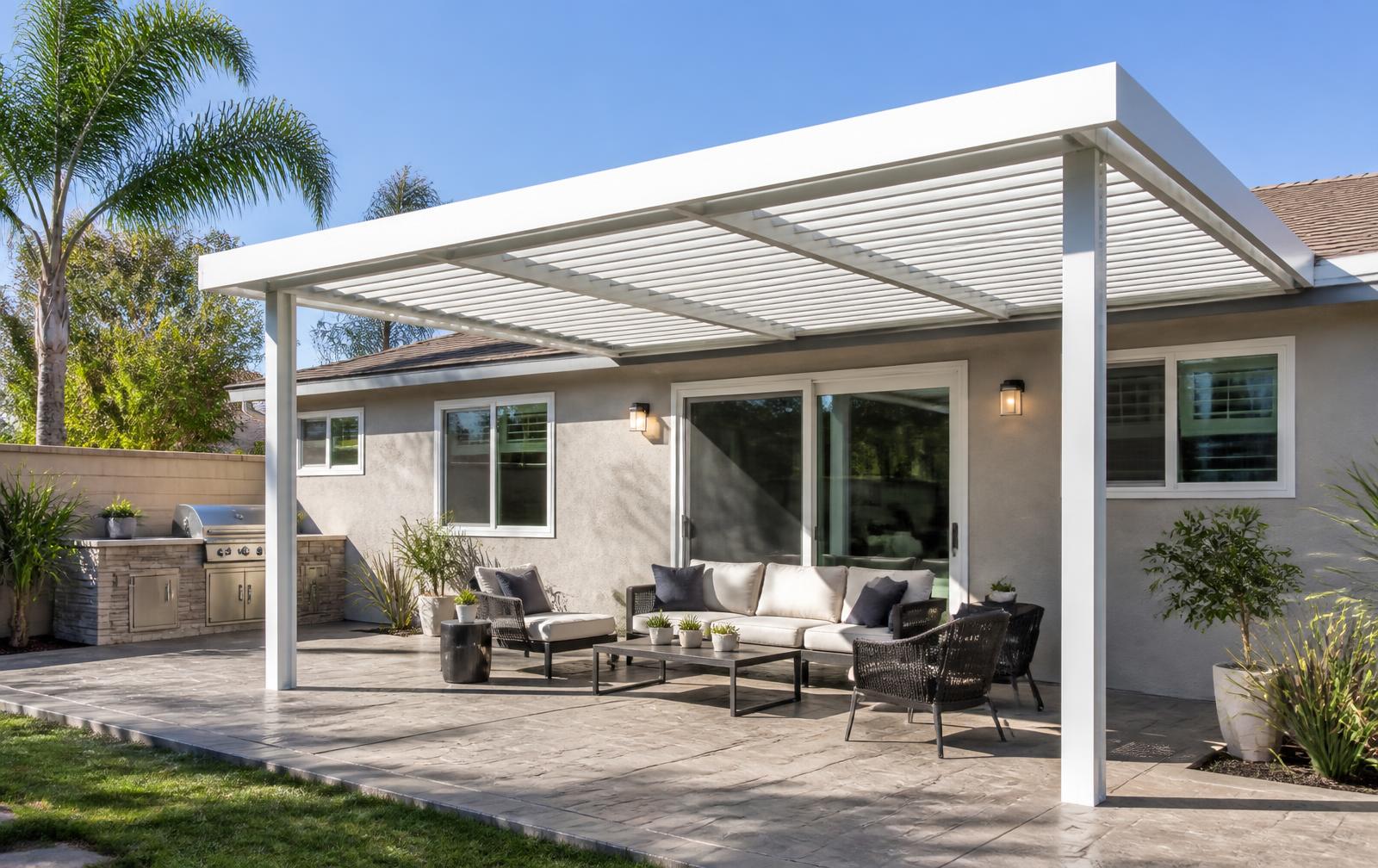
A roof-mounted patio cover attaches directly to your home's existing roofline or exterior wall, extending your living space outward while staying visually connected to the house. This is the most common style homeowners choose because it tends to look like a natural extension of the home rather than an add-on structure.
What are the advantages of roof-mounted patio covers in Selma?
Roof-mounted covers offer a clean, cohesive appearance with the structure lining up with your home's existing rooflines and siding. Because the house supports one side of the cover, fewer posts are needed, which keeps sightlines open and the patio feeling more spacious. Attaching to the home also generally means lower material and labor costs compared to a fully freestanding build, since there's less structural framing involved.
A roof mounted patio cover in Selma is also a smart way to maximize shade directly outside doors leading to the kitchen or living room, making it easy to move seamlessly between indoor and outdoor entertaining. For homes with covered patios already framed in the original build, a roof-mounted upgrade often integrates with existing gutters and downspouts, simplifying drainage.
What Is a Freestanding Patio Cover?
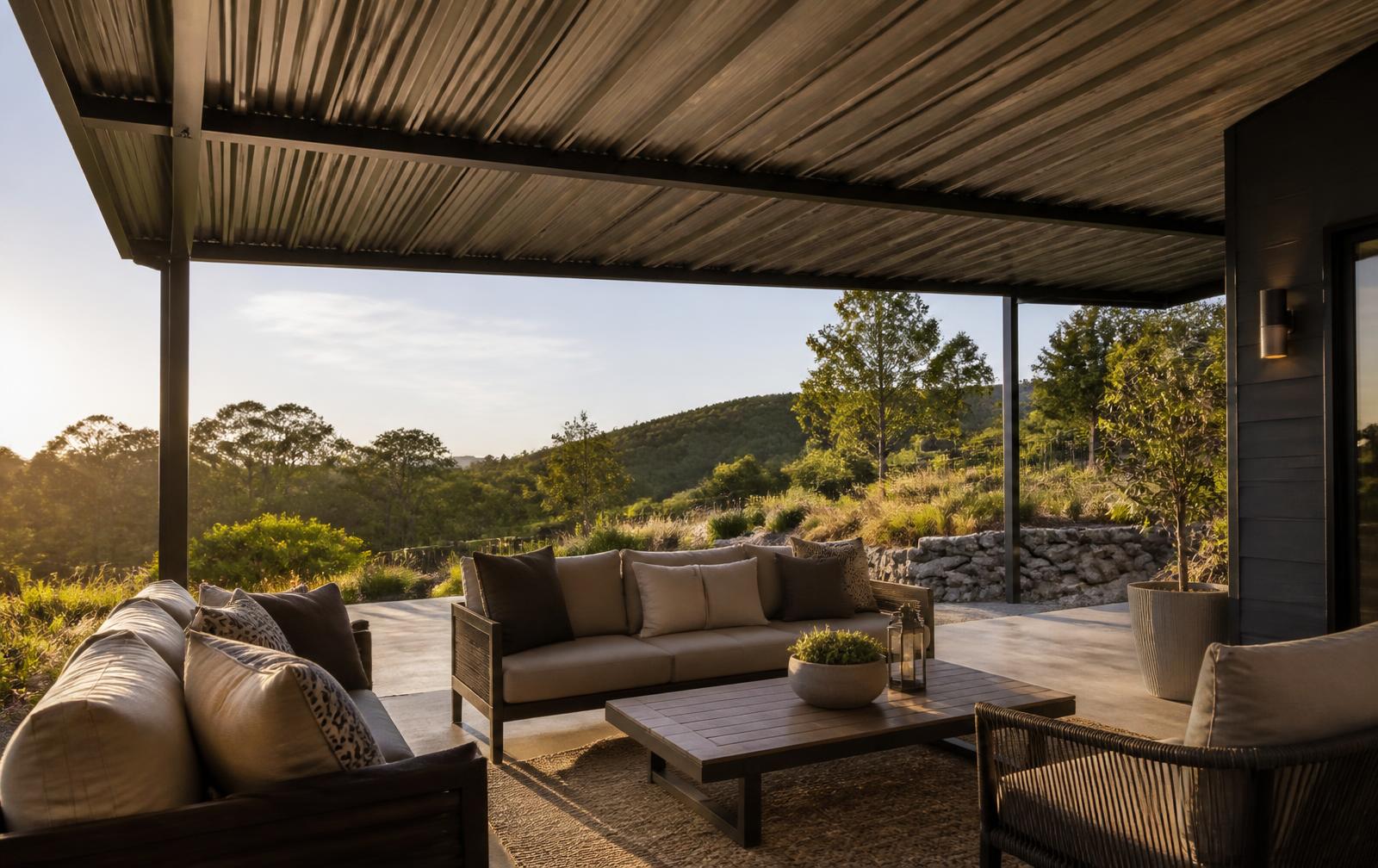
A freestanding patio cover is a standalone structure supported entirely by its own posts, with no attachment to the home. This gives homeowners far more flexibility in where the cover sits on the property.
Advantages of Freestanding Patio Covers
- Placement flexibility: Ideal for pool decks, detached patios, or areas set back from the house.
- No roofline restrictions: Works even if your home's existing roof pitch, gutter placement, or wall height makes attachment difficult.
- Design freedom: Can be built at any height or angle, independent of the home's architecture.
- Separate structural zone: Doesn't add load or drainage concerns to the existing roof system.
The trade-off is that freestanding structures typically require more posts and footings, which can mean a higher material cost and a slightly longer installation timeline than a comparable roof-mounted design.
Roof-Mounted vs. Freestanding: Side-by-Side Comparison
| Feature | Roof-Mounted | Freestanding |
|---|---|---|
| Attachment | Connects to home's structure | Fully self-supporting |
| Best for | Patios adjacent to the house | Pools, detached patios, open yards |
| Support posts | Fewer needed | More needed for stability |
| Typical cost | Generally lower | Generally higher |
| Design flexibility | Limited by roofline | High, placed anywhere |
| Drainage | Often ties into existing gutters | Requires its own drainage plan |
Choosing Materials: Metal vs. Other Options
Regardless of which structural style you choose, material matters just as much for Selma's climate. Aluminum and steel structures resist warping, rot, and pest damage far better than wood, which is a real concern given the region's heat and humidity swings. Metal patio covers in Selma hold up well against sun exposure and require far less upkeep over time, making them a popular choice for both roof-mounted and freestanding designs. If you want a visual sense of how different materials and finishes look once installed, browsing a project gallery can help you picture the finished result before committing to a style.
Should You Add Motorization?
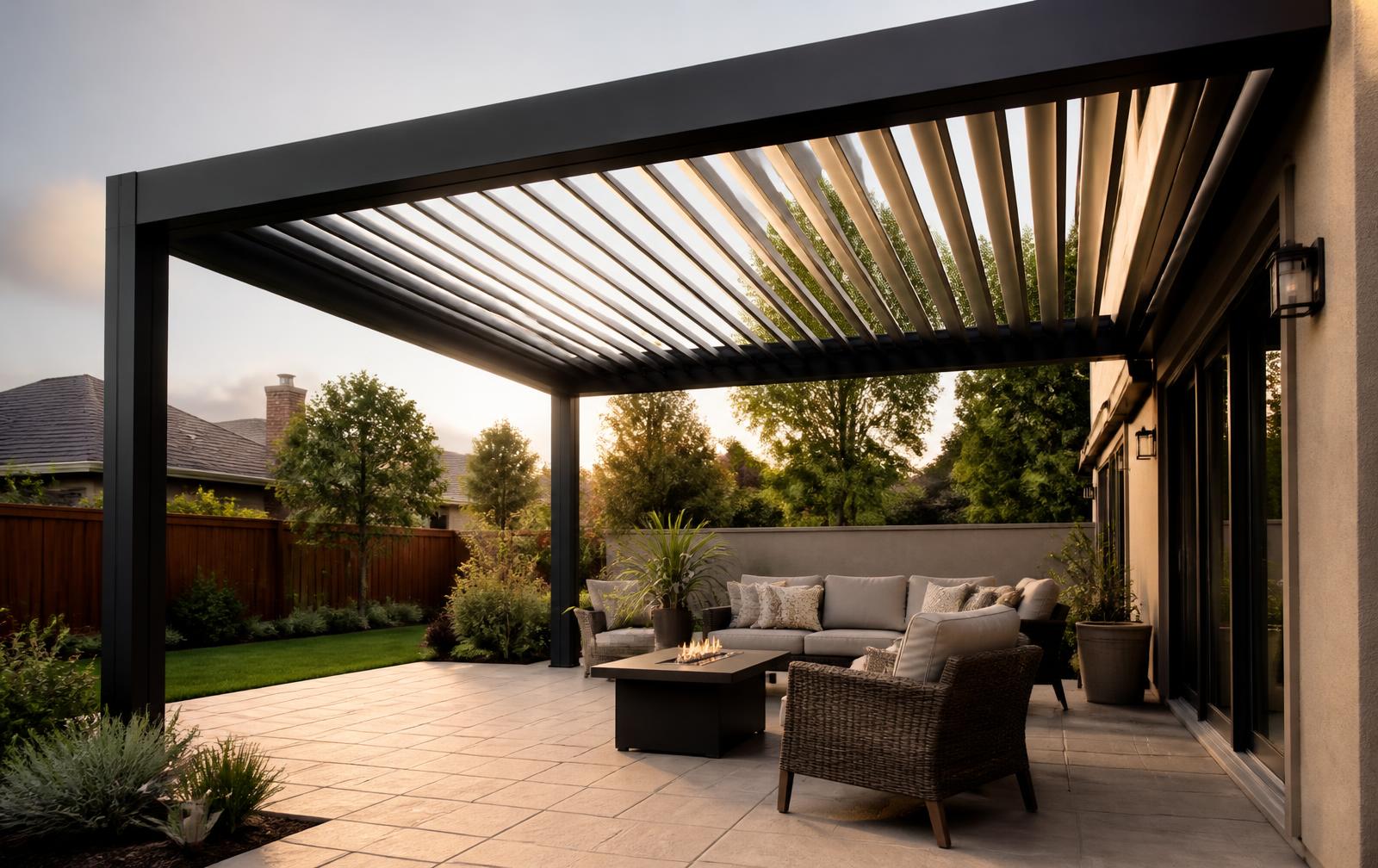
Whether you go roof-mounted or freestanding, you may also want to consider whether the cover's louvers should be fixed or adjustable. Motorized patio covers in Selma let you open the roof for full sun or close it for complete shade with the push of a button, giving you control over airflow, light, and even rain protection without needing to redesign the space later. Motorized systems can be added to either structural type, though roof-mounted designs often make wiring and control placement a bit more straightforward since they connect to the home's existing electrical access points.
Which One Is Right for Your Selma Home?
There's no universal answer here; it depends on your layout. If your patio sits right against the house and you want a budget-friendly, seamless addition, a roof-mounted cover is usually the better fit. If you're covering a pool area, a detached seating zone, or a space where the home's roofline doesn't line up well, a freestanding structure gives you the flexibility to build exactly where you want it.
Homeowners planning a full backyard renovation often start by exploring Selma patio cover options to see what styles and configurations are available locally, then narrow down based on their specific yard layout and budget. It's also worth checking your HOA guidelines, if applicable, since some communities have rules about structure height, materials, or placement near property lines.
Final Thoughts
Both roof-mounted and freestanding patio covers can transform a plain Selma backyard into a shaded, usable living space; the right pick just depends on your home's layout and how you want to use the area. If you're still weighing your options, it helps to talk through your specific yard with someone who's installed both styles locally and can walk you through real tradeoffs for your property.
If you're looking for more inspiration before making a decision, our blog covers additional patio design tips, material comparisons, and maintenance advice for Selma homeowners.
Ready to start planning your patio cover project? Contact us today for a free consultation and let's find the right fit for your outdoor space.
Key Takeaways
- Roof-mounted patio covers attach directly to your home for a seamless, integrated look and typically cost less to install.
- Freestanding covers work well for detached patios, pool areas, or homes where roofline attachment isn't practical.
- Your choice should depend on your home's structure, how much shade you want, and whether you plan to add motorized or lighting features later.
- A local installer can assess your roofline, HOA rules, and drainage needs before recommending the right option.