Key Takeaways
- Alumawood-style covers can be a practical, budget-conscious choice for basic shade, but fixed roofs do not provide the same flexibility as adjustable louvered systems.
- Central Valley patios face intense summer sun and heat, making adjustable shade especially useful for west- and southwest-facing outdoor spaces.
- 100% aluminum louvered systems can combine low maintenance, weather resistance and adjustable daylight control while offering a more tailored appearance.
- The right patio cover depends on the patio's orientation, span, drainage, desired shade, budget, and local code requirements, not simply the material name.
For homeowners exploring custom patio covers in california
Alumawood Alternative in the Central Valley: Is Adjustable Aluminum Better?
Central Valley homeowners know that a patio can be beautiful and still be difficult to use for much of the year. Long stretches of strong sun can turn an uncovered patio into a space that looks inviting from inside the house but feels too hot to enjoy. That is why the question is shifting from "What is the cheapest patio cover?" to "What type of shade gives me better control over my outdoor space?"
Alumawood-style patio covers have earned attention because they offer the appearance of wood with the low-maintenance qualities associated with aluminum. They can work well when the goal is straightforward, fixed shade. But homeowners comparing alternatives should also consider adjustable louvered aluminum, especially when they want to change the amount of sun, daylight and ventilation throughout the day.
That distinction matters in the Central Valley. Recent heat events have pushed parts of the region to around 100 to 105°F, illustrating why shade design is more than an aesthetic decision. Orientation, roof design and the ability to respond to changing sun angles can directly affect how comfortable a patio feels.
What Alumawood-Style Covers Do Well
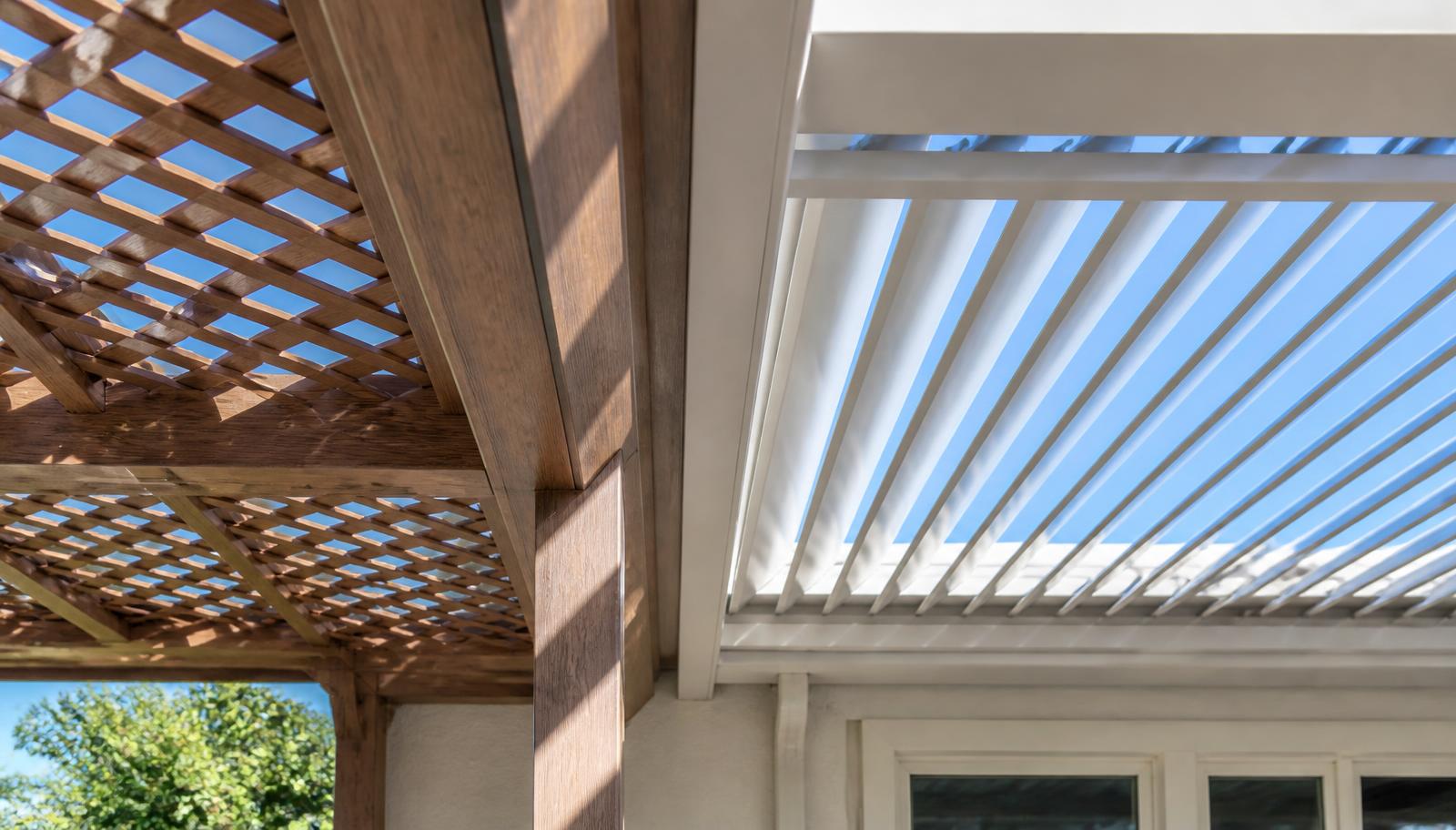
Alumawood is commonly used as shorthand for wood-look aluminum patio covers. The appeal is easy to understand: homeowners get a wood-inspired appearance without the routine staining, sealing and painting associated with many traditional wood structures. Fixed lattice and solid-panel designs can also be a sensible solution when the primary requirement is dependable overhead shade.
However, a fixed roof remains fixed. If afternoon sun arrives at a low angle, especially from the west, the cover cannot change position to respond. A recent Sacramento homeowner discussion highlighted the same practical considerations people often overlook when comparing bids: attachment, drainage, electrical work, posts, permits and engineering can matter as much as the roof material.
Why Consider a Louvered Aluminum Alternative?
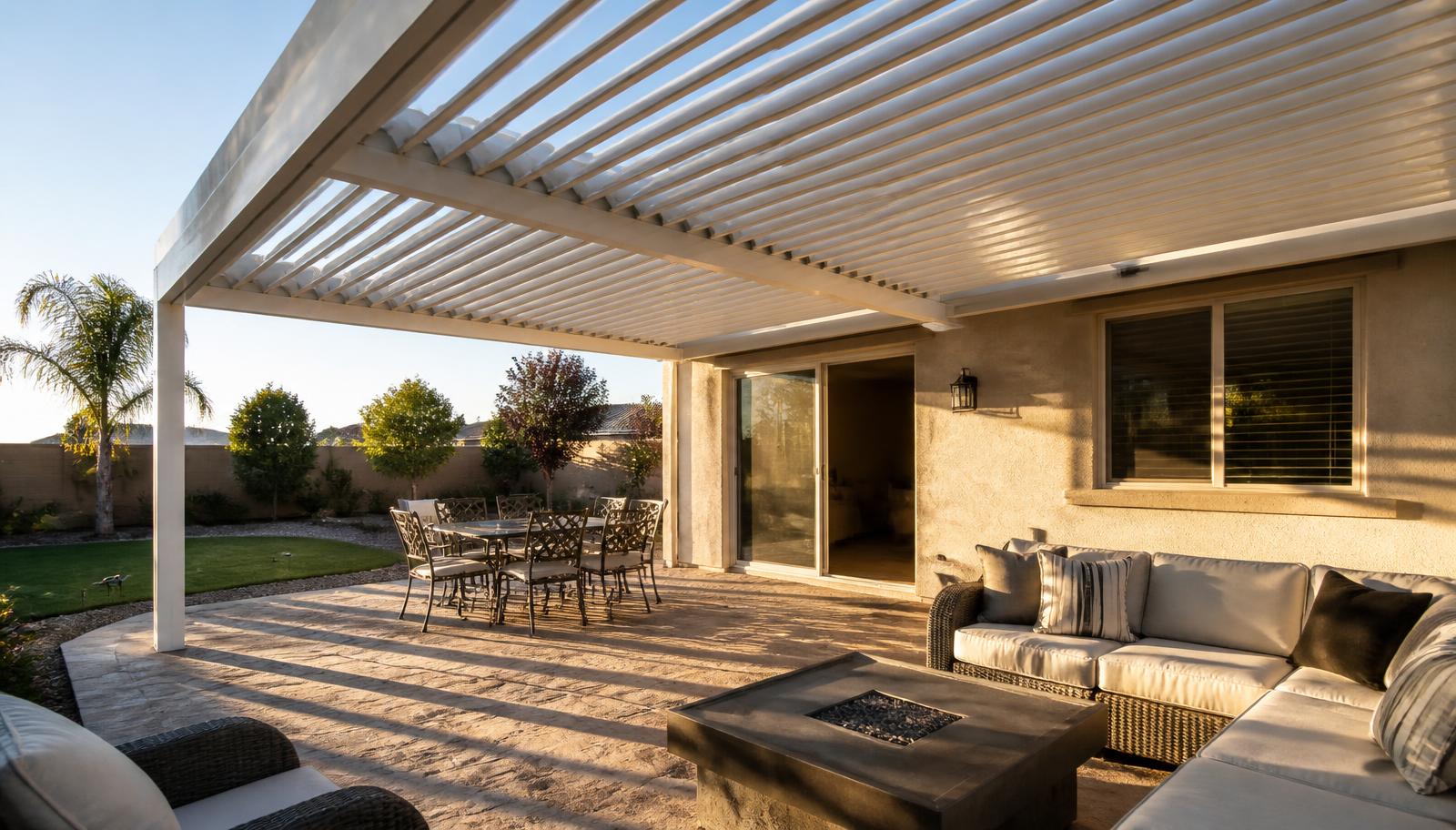
A louvered system changes the conversation because the roof can be adjusted. Louvers can be opened to bring in daylight and airflow or closed to create more complete overhead protection. That makes the patio more adaptable from morning through late afternoon rather than locking the space into one shade setting.
The existing Adjustable Patios page describes its systems as 100% aluminum, with roll-formed and heavy-duty extruded louver options, high-load engineering, and more than 1,000 custom colors. Those features are useful when a homeowner wants the structure to coordinate with the home's exterior rather than look like an afterthought.
Alumawood vs. Louvered Aluminum: At-a-Glance
| Consideration | Alumawood-Style Fixed Cover | Louvered Aluminum | Best Fit |
|---|---|---|---|
| Shade control | Fixed | Adjustable | Variable sun exposure |
| Maintenance | Generally low | Generally low | Homeowners wanting less upkeep |
| Daylight control | Limited after installation | Can be adjusted | Patios used throughout the day |
| Appearance | Wood-look options | Modern or custom finishes | Homes with specific design goals |
| Ventilation | Depends on design | Can be adjusted with louvers | Hot outdoor spaces |
| Budget approach | Often positioned as entry-level | Multiple system levels available | Different project priorities |
This comparison is directional rather than a price quote. Actual project cost depends on dimensions, attachment method, engineering, finish, electrical features, permits and installation conditions. Industry comparisons also note that aluminum generally requires less ongoing maintenance than wood because it does not require routine staining or sealing.
Central Valley Heat Makes Orientation Important
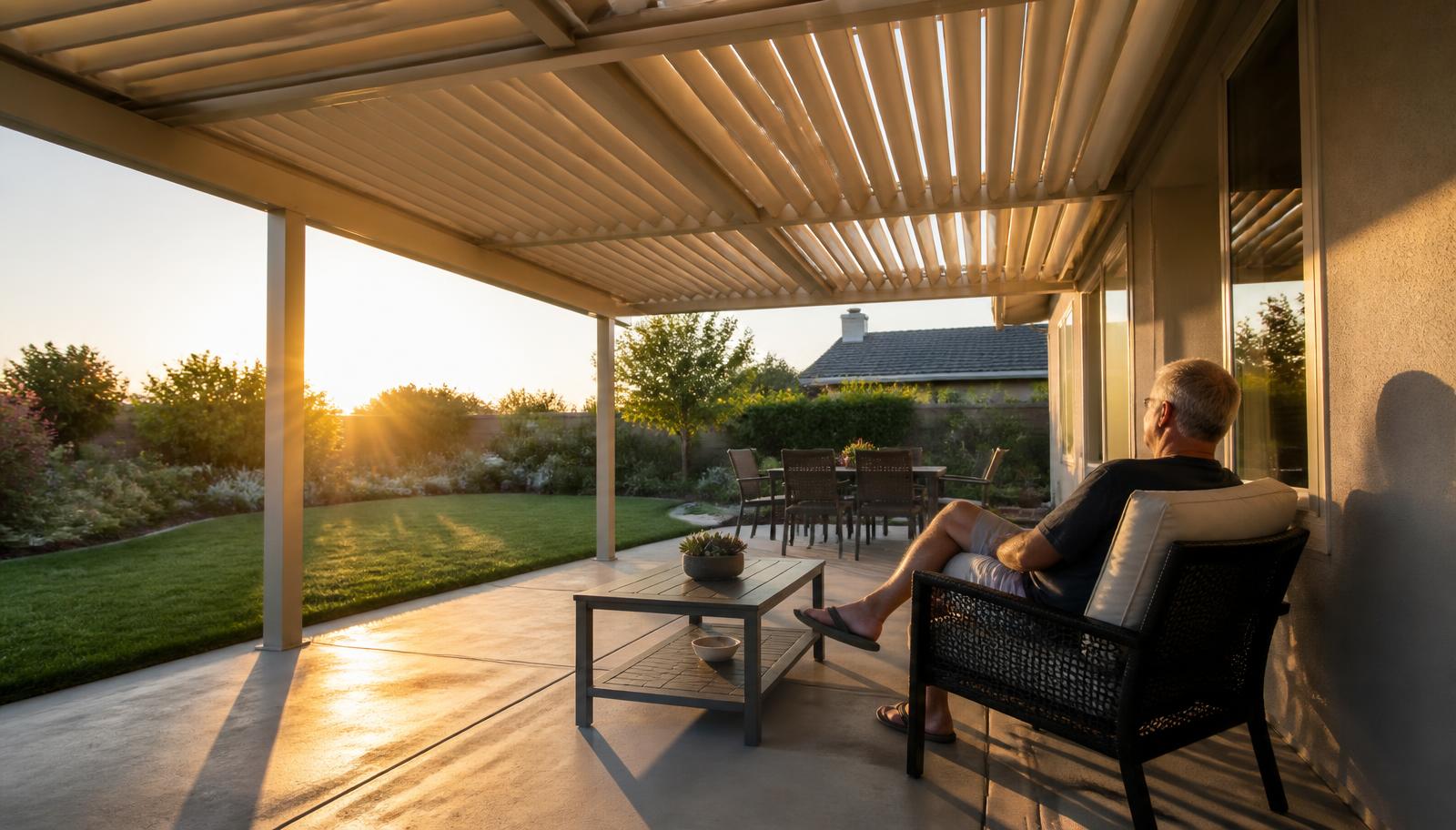
A patio facing west can be especially challenging because the afternoon sun arrives at a lower angle. A fixed overhead roof may block the sun directly above while still allowing glare and heat to enter from the side. Adjustable louvers cannot eliminate every source of heat, but they give homeowners another layer of control. Adding compatible shades, fans or other outdoor-living features can further improve comfort.
Think of the cover as part of a larger outdoor-comfort system. Before choosing a design, note where the sun hits at breakfast, midday and late afternoon. Also consider whether you want the patio to feel bright, shaded, open or enclosed at different times. That simple exercise can reveal whether a fixed cover or adjustable system makes more sense.
Real-World Planning Data to Compare Before You Buy
| Planning Factor | Why It Matters | Question to Ask |
|---|---|---|
| 100 to 105°F heat events | High outdoor temperatures increase the value of effective shade and ventilation. | How will this design perform during peak afternoon heat? |
| West-facing exposure | Low-angle afternoon sun can reach under fixed overhead covers. | Do I need adjustable louvers or side shading? |
| Long-term maintenance | Wood may require recurring sealing, staining or painting. | How much maintenance am I willing to do? |
| Local code/engineering | Attachment, loads and permits vary by project and jurisdiction. | Who handles engineering and permitting? |
| Outdoor features | Fans, lights and electrical work can change the installation plan. | Should these be planned before installation? |
The 100 to 105°F figure reflects a recent California heat event reported for the Central Valley; it is not a design temperature for every city or every summer. Project-specific structural requirements should always be confirmed with the installer and applicable local authorities.
What About Fire and Building Codes?
California homeowners should not assume that every aluminum patio cover has identical code treatment. Material, roof assembly, location, attachment and the property's wildfire exposure can affect requirements. Some California patio-cover guidance identifies solid aluminum and lattice aluminum systems among commonly used noncombustible options, while insulated assemblies may require different consideration. Always verify the exact assembly and local requirements before ordering.
How to Choose the Right Alternative
- Choose a fixed Alumawood-style cover if your priority is straightforward shade, a wood-look appearance and a simpler entry-level solution.
- Consider louvered aluminum if you want to adjust shade and daylight throughout the day.
- Compare the structural system, not just the roof finish. Ask about spans, posts, footings, attachment points, drainage and engineering.
- Look beyond the initial price. Warranty, maintenance, finish quality and installation support can influence the long-term value.
- For a west-facing or heavily exposed patio, evaluate the complete design, including side shade, fans, lighting and airflow, rather than judging the roof alone.
For Central Valley homeowners comparing these options, Adamo Construction can help homeowners compare practical patio-cover approaches based on the space, exposure and desired outdoor experience.