For Clovis homeowners, picking a patio cover feels like it should be simple, until you actually stand outside in July and realize the shade you paid for isn't doing much against the heat. The truth is, not all patio covers behave the same way once the weather gets involved. Some are built to hold one position forever. Others adjust with you, day to day and season to season. Knowing the difference before you build can save you from a patio you only use three months out of the year.
One setting versus every setting
A solid aluminum or lattice patio cover is built for a single condition. Once it is up, the amount of light reaching your patio never changes. That works for about three months of the year in Selma and throughout the Central Valley, and it works against you the rest of the time.
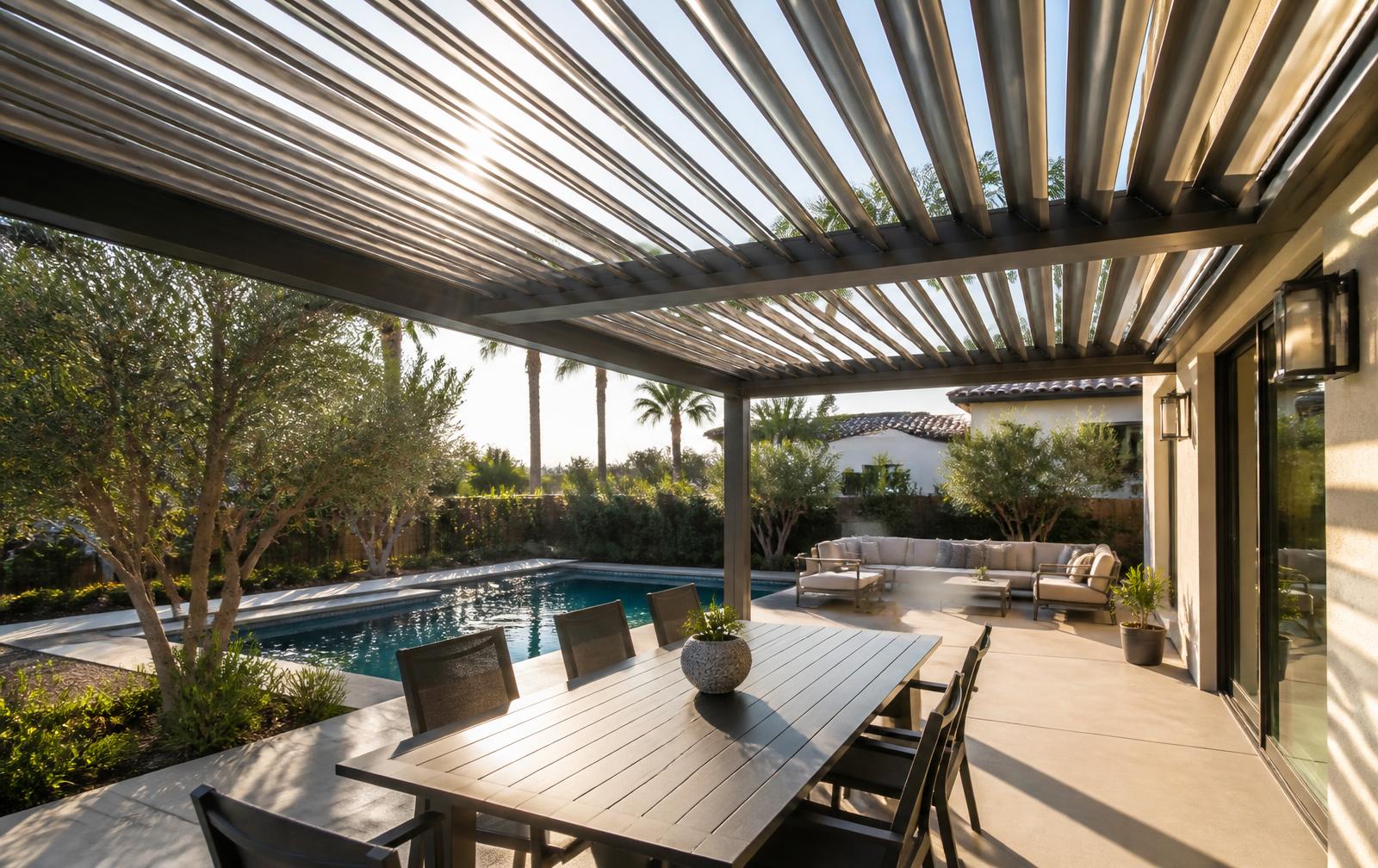
An adjustable louvered roof rotates. Open the louvers in winter for direct sunlight and passive warmth, tilt them mid-day in summer for full shade with airflow, and close them tight when the rain comes so the space underneath stays dry.
Think about how your patio actually gets used across the year. In January, you probably want as much sun on that space as you can get, just to make it bearable to sit outside. In August, it's the opposite problem entirely, and you're looking for anywhere shaded enough to eat dinner without sweating through it. A solid cover picks one of those conditions and locks you into it. A louvered roof just adjusts to whichever one you're dealing with that day. It's less a design feature and more a way of getting a full year of use out of a space that would otherwise sit empty half the time.
There's also the rain factor, which is easy to overlook until it actually rains. A solid cover always sheds water the same way, whether you want it dry underneath or you'd rather let some light rain through to water nearby plants. Louvers give you the choice. Close them and the patio stays dry. Open them partway and you get airflow without the whole space getting soaked.
Airflow is the part people underestimate
A solid roof traps heat against the underside of the panel and radiates it back down at you. Louvers vent that heat upward while still blocking direct sun, which is why a louvered patio feels noticeably cooler on a 105 degree afternoon even though both covers technically provide shade.
This is the detail that surprises most homeowners the first time they experience it. Shade alone doesn't mean comfortable. A solid panel sitting in full Central Valley sun all day soaks up heat, and that heat has nowhere to go but down, straight onto whoever is sitting underneath it. It's why a "shaded" patio under a solid cover can still feel like standing next to an oven by mid-afternoon.
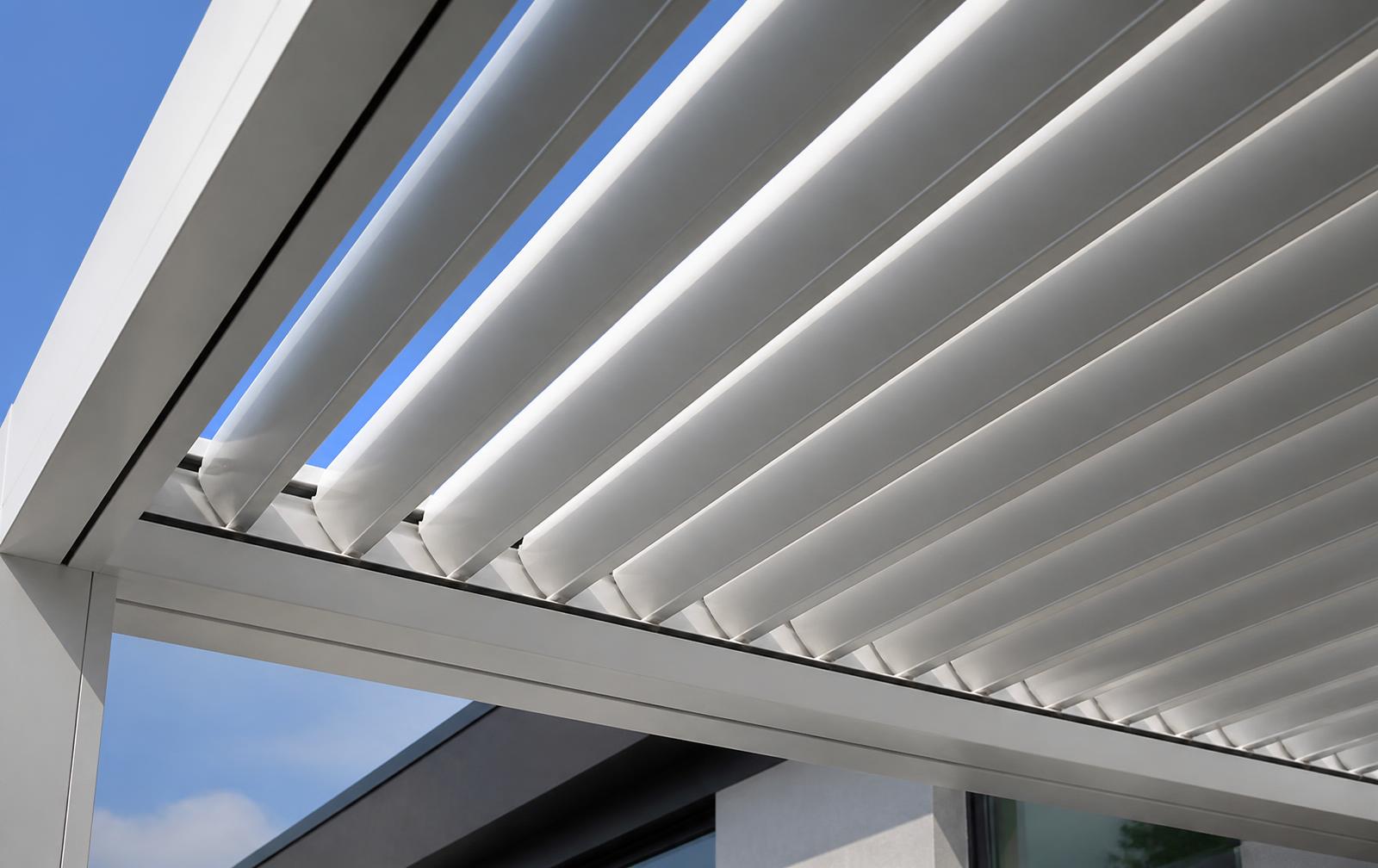
Louvers solve this by design rather than by accident. Because the slats are angled instead of sealed flat, hot air rises and escapes through the gaps instead of building up underneath. You still get the shade, but you also get a breeze moving through, which is usually the difference between a patio you actually sit on and one you just walk past on your way to the yard.
Which one is the better investment
Solid covers cost less up front. Louvered systems cost more and deliver a usable outdoor room year round, which is what buyers and appraisers respond to. We build in good, better and best configurations so the louvered option lands in a real budget rather than an aspirational one.
It's worth thinking about this less as "which cover is cheaper" and more as "which cover actually gets used." A solid patio cover that only feels comfortable for a few months a year isn't saving you money if the space sits unused the rest of the time. A louvered system costs more at the outset, but it's functional in every season, which means it's actually adding livable square footage to your home rather than just adding a roof over concrete.
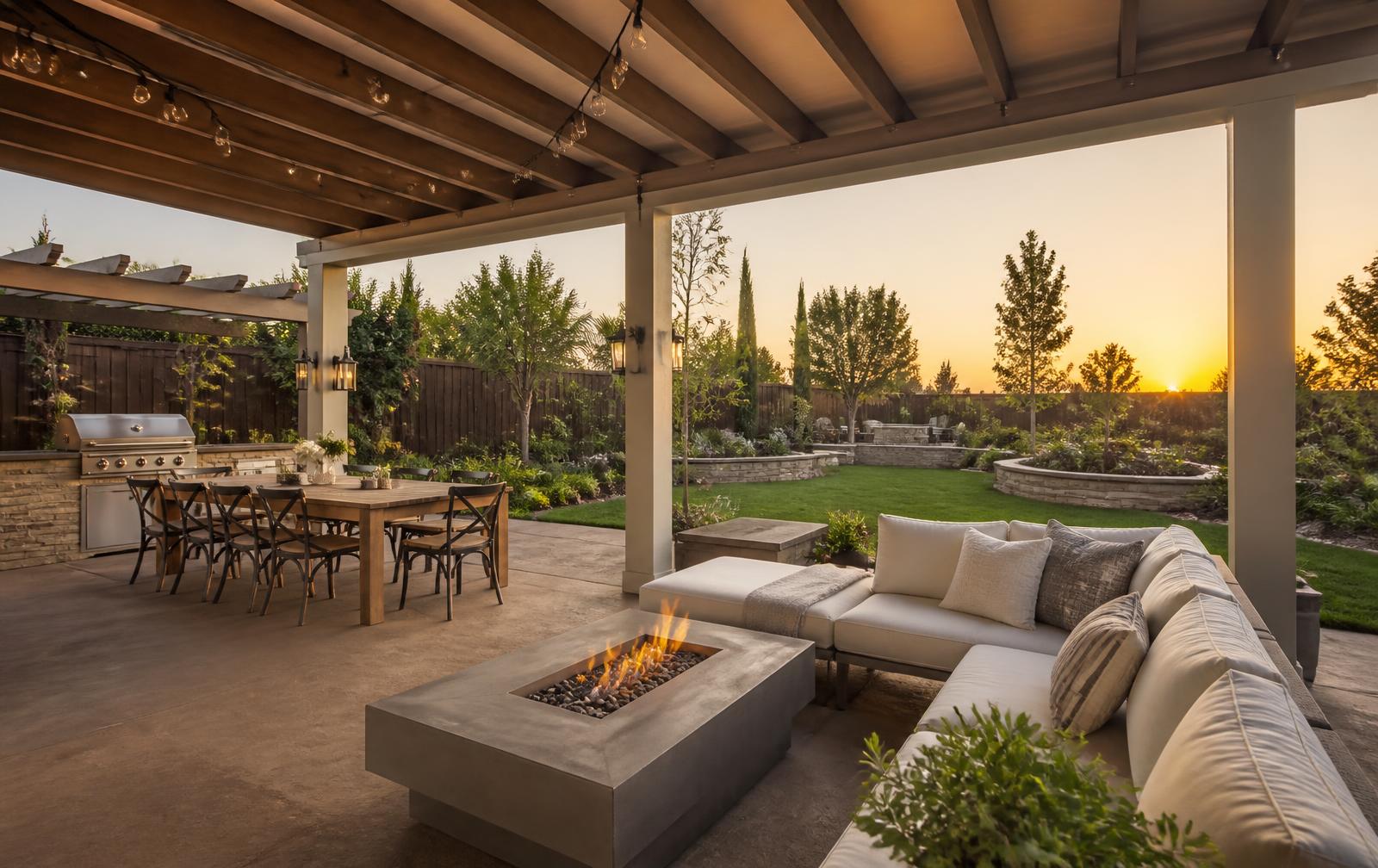
None of this means a solid cover is a bad choice. If budget is the deciding factor and you mainly need shade during a few peak summer weeks, a solid cover still does that job well and costs less to install. The point is knowing what you're actually buying shade for part of the year, or a space you can use in nearly all of it.
Choosing the right patio cover for your home
The right choice comes down to how you actually want to use the space, and what you're willing to spend to get there. If you're after a straightforward, budget-friendly shade solution and don't mind losing the space during the hottest and coldest stretches of the year, a solid cover gets the job done. If you want a patio that works in January and August alike, with the flexibility to open it up, shade it, or seal it against rain depending on the day, a louvered system is built for exactly that.
Either way, it helps to talk through your specific space, budget, and how your family actually uses the backyard before deciding. A contractor with experience designing patio covers for Fowler homes can recommend the option that best fits your property and lifestyle.
Ready to Upgrade Your Outdoor Space?
Whether you're leaning toward a solid cover or an adjustable louvered roof, the right patio cover comes down to how you actually plan to use the space.
Adamo Construction Services for a free consultation and find the configuration that fits your budget and your backyard.
Key Takeaways
- Solid patio covers hold one fixed setting; louvered roofs adjust for sun, shade, and rain as conditions change.
- Louvers vent trapped heat, making the space noticeably cooler than a solid cover on hot Central Valley afternoons.
- Solid covers cost less upfront but see limited use outside of a few months a year.
- Louvered systems cost more but function as usable outdoor living space year round.
- Good, better, and best configurations make a louvered roof achievable on a range of budgets.